A clean valeting job and a friendly seller can make any second hand car seem convincing for ten minutes. A methodical inspection gives you time to spot problems that photos, adverts and a quick walk-around can hide.
Check the car before it moves, drive it on more than one type of road, then match what you found with its vehicle history and records. A sensible inspection protects your budget and makes it easier to walk away when something doesn't add up.
Key Takeaways
- View the car in daylight and ask for the engine to be cold when you arrive.
- Look for uneven tyre wear, mismatched paint, poor panel gaps and warning lights.
- Test the clutch, brakes, steering, gearbox, suspension and all major electrical items.
- Check that cabin wear makes sense for the recorded mileage.
- Verify the VIN, MOT certificate, service records and registration documents before paying. A vehicle check can reveal outstanding finance, theft or write-off records.
- Arrange car insurance before driving a private seller's car, and book an independent inspection if concerns remain.
Arrange a Test Drive With a Clear Plan
A good seller should expect sensible questions. In your first message, say you're interested in test driving a used car and want enough time to inspect it. Ask to drive on local streets and a faster road where practical. Thirty to 45 minutes is usually enough for a focused viewing.
Be Upfront Without Apologising
You don't need to pretend you are ready to buy before seeing the car. Try: "I'm interested if the condition and history check out. Could I view it in daylight, see the documents, including the MOT certificate, and take a short insured drive?"
A main dealer or independent dealer may ask to see your driving licence, take a copy, or sit with you. An accompanied-drive process is normal. A private seller may prefer to join the drive or hold your keys. Those are reasonable precautions.
Pick the Right Time and Route
Avoid viewing in darkness, heavy rain or when you feel rushed. Daylight makes paint defects and tyre condition easier to see.
Plan a route with a quiet residential road, a few stops, a roundabout and a stretch at normal higher-road speeds. You are checking how the car behaves in ordinary use, not testing top speed or hard cornering.
Used Car Test Drive Checks Before You Start
Complete the bodywork checks before you turn the key. If the engine's already warm, ask why. A cold start can reveal rattles, smoke and poor idling that a warmed-up engine may conceal.

Inspect Bodywork, Glass and Tyres
Walk around the car slowly. Small stone chips are common on a used vehicle, but uneven panel gaps, overspray on rubber trims, different paint shades or doors that need a slam can point to accident repairs. Ask for a clear explanation and supporting invoices.
Check each tyre, including the spare if fitted. The legal minimum tyre tread depth is 1.6 mm across the central three-quarters of the tread, around the full circumference. The 20p coin is a quick guide: place it into the main tread groove. If the outer rim is hidden, the tread is generally above 1.6 mm. Uneven wear at one edge can suggest poor alignment, worn suspension parts or underinflation.
Also look for cracked sidewalls, bulges, tyre age and mismatched tyres across an axle. A cheap tyre can become an immediate replacement cost.
Look Under the Bonnet and Behind the Car
With the engine off and cool, open the bonnet and inspect the engine bay. Check the oil level using the oil dipstick where fitted. Look for a sensible level, not a dry dipstick or thick sludge. Coolant should sit between its minimum and maximum markers, while the brake fluid reservoir should not be empty.
Dampness around hoses isn't always serious, but fresh oil leaks, a sweet coolant smell or damaged wiring deserve a mechanic's opinion. Don't remove a coolant cap from a hot engine.
Watch for exhaust smoke after starting. Brief white vapour on a cold day can be normal condensation. Persistent white exhaust smoke can indicate a fault. Blue exhaust smoke may mean the engine is burning oil, while heavy black smoke can indicate fuelling or air-intake faults.
A seller who refuses to let you start the car from cold removes one of the most useful checks you can make on a petrol or diesel car.
Compare Cabin Wear With the Mileage
The interior often tells a more honest story than a polished bonnet. A 40,000-mile car can have wear, especially in town use, but it should not look heavily used without a credible reason.
Check Seats, Pedals and Controls
Inspect the driver's seat bolster, steering wheel, gear knob and pedal rubbers. Excessively shiny pedals, a sagging seat or deeply worn switchgear can conflict with a low odometer reading.
Turn the ignition on before starting. Warning lights should illuminate as part of the self-check, then go out once the car starts. An engine-management, airbag, ABS or battery light that stays on needs investigation.
For a hybrid, confirm the car enters its ready-to-drive state and that any petrol engine starts and stops smoothly when required. A silent engine at start-up may be normal for a hybrid, so ask the seller to explain the system if you are unfamiliar with it.
Test Every Useful Electrical Feature
Try the windows, central locking, mirrors, lights, wipers, washers, horn, heater, air conditioning and infotainment. Set the fan through every speed and temperature setting. Air conditioning should blow noticeably cooler after a short period, even on a mild day.
Test reversing sensors or a camera, if fitted, and check both keys. Replacing a modern remote key can be expensive. A missing locking-wheel-nut key can also complicate a future tyre change.
What to Notice While Driving
Set your seat and mirrors properly, fasten your seatbelt and take a moment to understand the controls. Keep your phone away and drive within the speed limit. The purpose of this drive is to assess normal operation safely.

Listen for Clunks, Pulling and Vibration
On a quiet road, listen with the radio off. A brief tyre hum may be normal, while repeated knocking over bumps can point to worn suspension components. A droning noise that rises with road speed may indicate a wheel bearing or tyre issue.
Let the steering wheel sit naturally on a level, safe road. The car should track straight without constant correction. Pulling under braking, vibration through the wheel or an off-centre steering wheel warrants further checks.
Assess the Gearbox, Clutch and Brakes
A manual gearbox should select gears cleanly without crunching. The clutch biting point should feel predictable, not so high that it seems close to the top of pedal travel. On a safe incline, a slipping clutch may show itself as rising engine revs without matching acceleration.
An automatic should change smoothly and select drive or reverse without a long delay or harsh thump. During normal braking, the pedal should feel firm and the car should stop straight. Pulsing through the brake pedal can suggest warped discs, while a spongy pedal needs urgent inspection.
Verify the History Before You Agree a Price
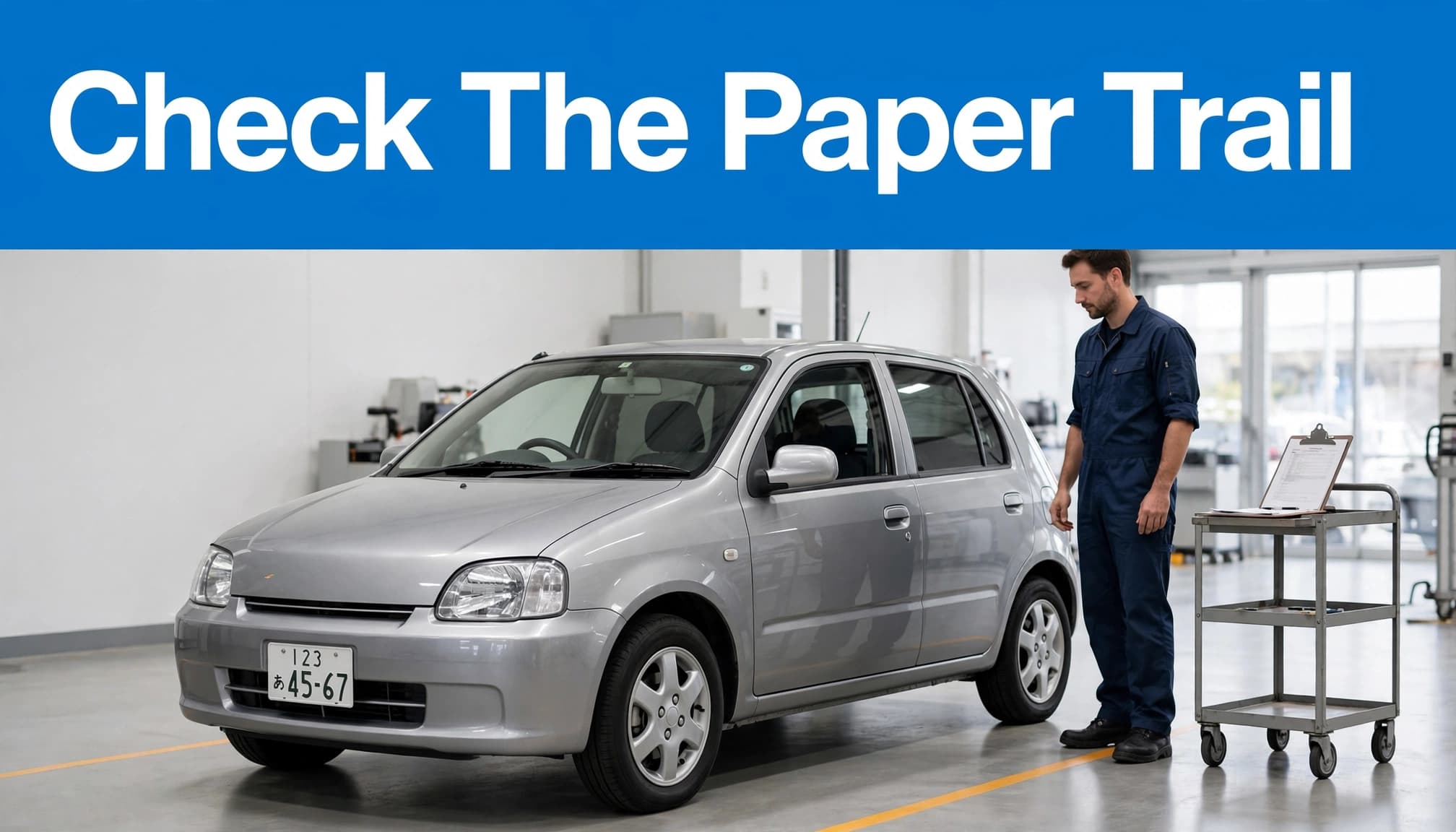
A pleasant drive does not replace paperwork checks. First, confirm the registration, make, model, colour, fuel type and engine size match the car, its V5C registration certificate and MOT certificate.
Match the VIN and service history
Find the VIN, usually visible at the base of the windscreen and often on a door shut or under the bonnet. It must match the V5C registration certificate and service documents exactly. Scratched, loose or mismatched VIN plates are a reason to stop the purchase.
Review the service history for dates, mileages and work completed. A stamped book is helpful, although itemised invoices give stronger evidence. Look for regular oil changes and proof of major scheduled work, such as timing belt replacement where applicable.
The V5C is commonly called the log book and identifies the registered keeper. It is not proof that the seller owns the car outright, so never rely on it alone.
Check MOT, Finance and Theft Records
Use the GOV.UK used vehicle checks to compare the seller's details with DVLA records and the MOT certificate. Repeated advisories on the MOT certificate for tyres, brakes, corrosion or suspension can reveal postponed maintenance.
A paid vehicle check can identify outstanding finance, insurance write-offs or theft markers in the vehicle history. Citizens Advice guidance on buying a used car also recommends checking DVLA details, MOT history and private history reports.
Ask the seller why they are selling and note whether their account matches the documents. Keep copies of the advert, messages, agreed repairs and any warranty terms.
Insurance and Dealing With Reluctant Sellers
Never assume your standard car insurance covers another car. Driving Other Cars cover, if included, often gives third-party-only protection and may not apply to a test drive. Read your policy wording before arranging the viewing.
Get Cover Before Taking the Wheel
A car dealership may have motor-trade cover for accompanied drives, but confirm this rather than guessing. A private seller usually expects buyers to arrange their own cover. Short-term cover can be a practical option, and RAC test drive insurance explains cover designed for a test drive and driving the car home if purchased.
Ask the seller in advance: "Will I be covered under your policy, or should I arrange temporary cover in my name?" Get the answer before you arrive. Guidance on test-driving without insurance makes clear that the seller's insurance does not automatically protect you.
Walk Away From Pressure
A seller may not allow a drive without a licence check or accompanying you. That is fair. Pressure to pay a deposit immediately, refusal to show documents, or a ban on an independent inspection is different.
Stay polite and direct: "I don't make a decision without confirming the history and having time to consider it." A legitimate seller should accept that.
Use an Independent Inspection for Uncertainty
Arrange an independent mechanical inspection by a qualified mechanic before purchase, especially if the car is expensive, older, modified, imported or showing warning signs. It can assess the underside, suspension, brakes, diagnostics and previous repair quality in ways a roadside viewing cannot.
An inspection is especially useful when service records are incomplete, tyre wear is uneven, smoke appears from the exhaust or the seller's answers keep changing. The cost could save you far more than it spends.
Do not pay in full until the checks are complete. If you leave a deposit, get the amount, conditions and refund terms in writing.
Frequently Asked Questions
How long should a used car test drive last?
Aim for 20 to 45 minutes, including a cold start and a varied route. A five-minute lap around a car park won't reveal how the gearbox, brakes, steering and suspension behave at normal speeds.
What does uneven paintwork or mismatched panels mean?
It can indicate a previous repair after collision damage. Repairs aren't automatically a reason to reject the car, but poor panel gaps, paint overspray or a vague explanation should lead to a professional inspection and checks of the car's records.
Can mileage be verified from cabin wear alone?
No. Cabin wear is only a clue. Compare it with MOT certificate mileage records, service invoices, the odometer and the condition of the pedals, seats and controls. A mismatch needs a clear, documented explanation.
Can a vehicle check reveal outstanding finance?
Yes. The report can show whether outstanding finance is recorded against the car. Don't agree a price until the seller has resolved any issue and provided proof.
What should I do if there's exhaust smoke?
Persistent blue, white or black exhaust smoke should prompt professional investigation. It may point to an engine, coolant or fuel-system problem, especially if it continues after the car has warmed up.
Make Your Decision With Evidence
A used car should feel predictable on the road, match its records and give you confidence in the seller. The strongest buying decision comes from combining a careful used car test drive with document checks, the MOT certificate and an independent inspection where anything feels uncertain.
A missed bargain is cheaper than an overlooked fault.