An imported car can offer low mileage, strong specification and models rarely sold in the UK. However, its early life may sit outside the records that most British buyers rely on.
Checking imported car history means joining UK databases with documents from the vehicle's country of origin. A clean MOT record alone cannot confirm what happened before the car arrived here.
Start with the car's identity, then build an evidence trail before agreeing a price or paying a deposit.
Key Takeaways
- Check the registration, VIN, V5C and DVLA details before looking at cosmetic condition.
- UK MOT data can confirm mileage and test history after registration, but it cannot fill in an overseas gap.
- A paid vehicle history check can flag finance, theft, write-off and mileage concerns, yet it is not a complete overseas record.
- For Japanese imports, request the auction sheet, export paperwork and service records, then compare every chassis number and mileage figure.
- If documents conflict, pause the purchase and arrange an independent inspection.
Why Imported Car History Needs Extra Care
A UK-supplied car often has a longer trail of MOTs, service history and ownership records. An import may appear in British systems only from its registration date, even if it is several years old.
The UK record may begin years after manufacture
A 2018 Japanese car imported in 2025 may have no UK history before 2025. Its first British MOT mileage is useful, but it does not verify the mileage recorded in Japan.
This gap does not mean the vehicle is unsuitable. It means you need stronger evidence from before it entered the UK. Ask the seller when it arrived, who imported it and whether they can explain the route from overseas sale to UK registration.
One report is never the full answer
Every database has limits. A commercial report may search UK-held data, while an overseas auction record can show a snapshot from a Japanese sale. Neither replaces the other.
A believable history has matching details across several sources, including the VIN, dates, mileage and vehicle specification.
If the seller says a document has been lost, treat the missing information as a risk when deciding the price.
How to Check Imported Car History From the VIN Up
The registration plate can change. Use the VIN or chassis number as the starting point for a car import check. The vehicle identification number, or VIN, is the more permanent reference point. Record the vehicle identification number before comparing any documents.
On many Japanese imports, the chassis number may be used alongside the full VIN.
Match the car, V5C and advertised details
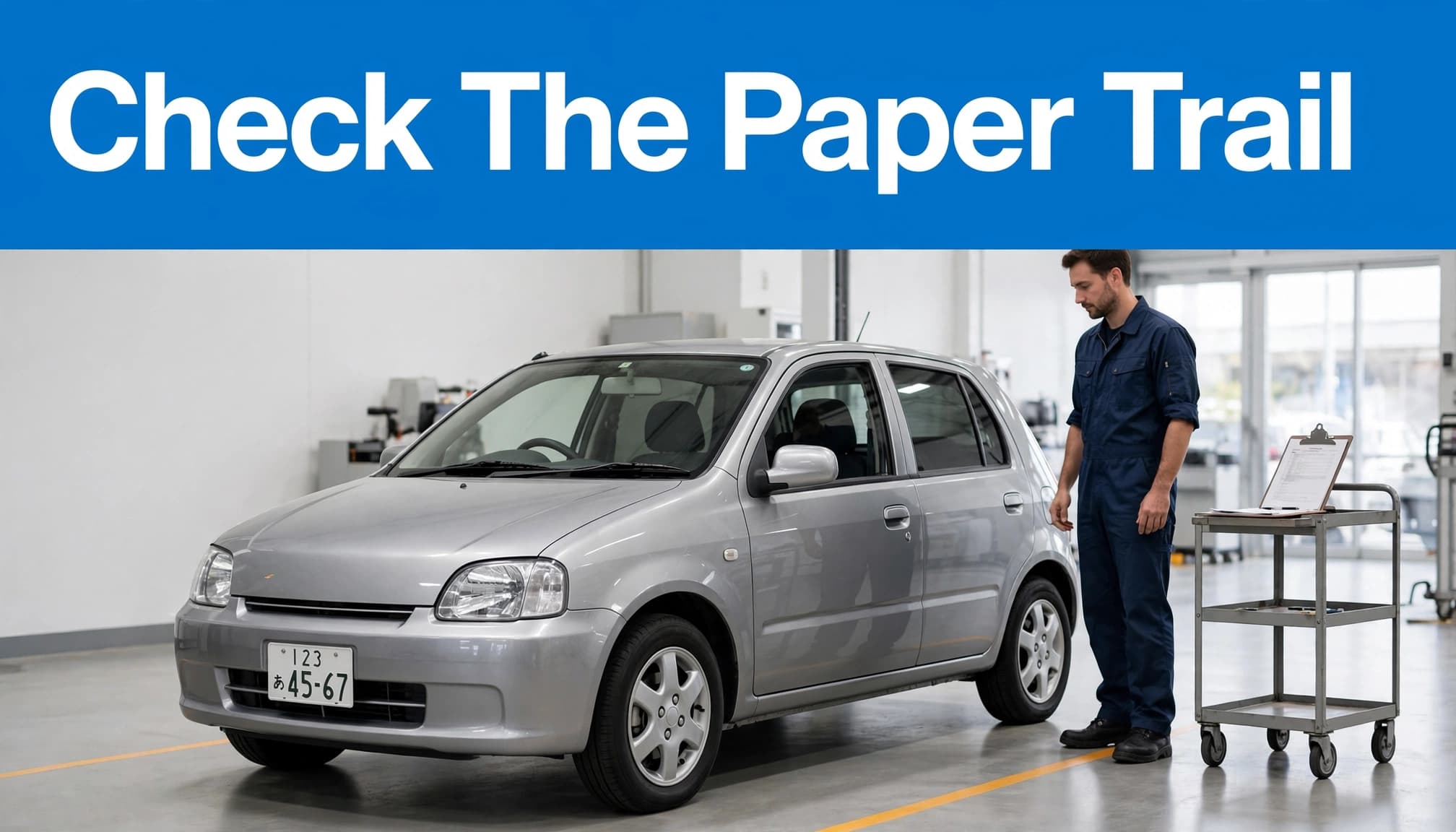
View the car in person and compare the vehicle registration, VIN or chassis number and engine details with the V5C. Check the number where it is physically stamped or displayed on the vehicle, not only on paperwork.
Look for signs of interference around identification plates, such as fresh rivets, damaged trim or mismatched paint. A seller should allow you time to inspect these areas. If the numbers differ, walk away until DVLA or a marque specialist has provided a clear explanation.
Use DVLA data as the UK starting point
The free DVLA vehicle information service shows details including tax status, SORN status, MOT expiry, first registration date and the last V5C issue date.
The first registration date helps place the car's UK timeline. Still, it does not tell you where the vehicle was used before it came here. A recently issued V5C is not proof of a problem, but it gives you a sensible reason to ask why it was issued.
Check UK MOT and Mileage Records
MOT data is one of the easiest free checks available to a buyer. It can also reveal mileage that rises inconsistently after the vehicle entered the country.
Read every MOT entry, not only the latest pass
Use the GOV.UK MOT history checker to see recorded test results and mileage. Compare the vehicle's UK mileage history with the advert, dashboard, service history and any Japanese documentation.
Read advisory items as well. Repeated tyre, brake, suspension or corrosion advisories can reveal a maintenance pattern that a freshly issued MOT certificate doesn't show.
Understand what an MOT cannot prove
A newly imported car may have little or no British MOT history. That's normal if it has only recently been registered, so don't mistake an empty record for low mileage or excellent condition.
Mileage should rise in a logical sequence. For example, a Japanese auction sheet showing 62,000 km before export should broadly align with the first UK record after allowing for the journey, conversion errors and the time between sale and registration. A lower UK figure needs a documented explanation.
Add a Paid Vehicle History Check
Free government services establish the UK registration facts. A paid vehicle history check adds another layer, particularly where the seller cannot provide a convincing paper trail.
What commercial checks can add
An HPI Check can search for issues such as outstanding finance, stolen status, write-off status, MOT history and mileage information. An alternative report from a reputable provider may search different data sources.
Run the check using the correct registration and VIN details where possible. Save the HPI check with the advert and seller messages. It may help if a concern emerges after purchase.
Treat alerts as a reason to investigate
An outstanding finance alert or stolen vehicle alert should stop the transaction until it is resolved in writing. Ask the seller for evidence, then verify it with the relevant finance company, insurer or checking provider.
Recorded write off categories deserve extra caution because they may indicate damage affecting repairs, safety systems and resale value. Some providers may include insurance status or damage data where records are available. Don't accept a verbal assurance that a car was "only lightly damaged". Arrange an independent mechanical inspection by a suitably qualified garage before proceeding.
Commercial reports depend on records available in the origin and destination countries. They can reveal important UK risks, but they can't promise a complete overseas history or confirm a car's mechanical condition.
Trace the Car's Life Before It Reached the UK
For a Japanese domestic-market vehicle, the strongest pre-UK evidence often combines the auction sheet with the export record and supporting paperwork.
Read Japanese auction sheets carefully
An auction sheet may record a mileage figure, condition grade, inspection notes and damage markings at the time of sale. Ask for the original sheet or a legible copy, rather than a cropped image showing only the grade.
Check that the chassis number on the document matches the vehicle. Also compare the mileage and auction date with the export documents. A translated copy can help, although the original reference number and markings should remain visible.
Gather the supporting paperwork
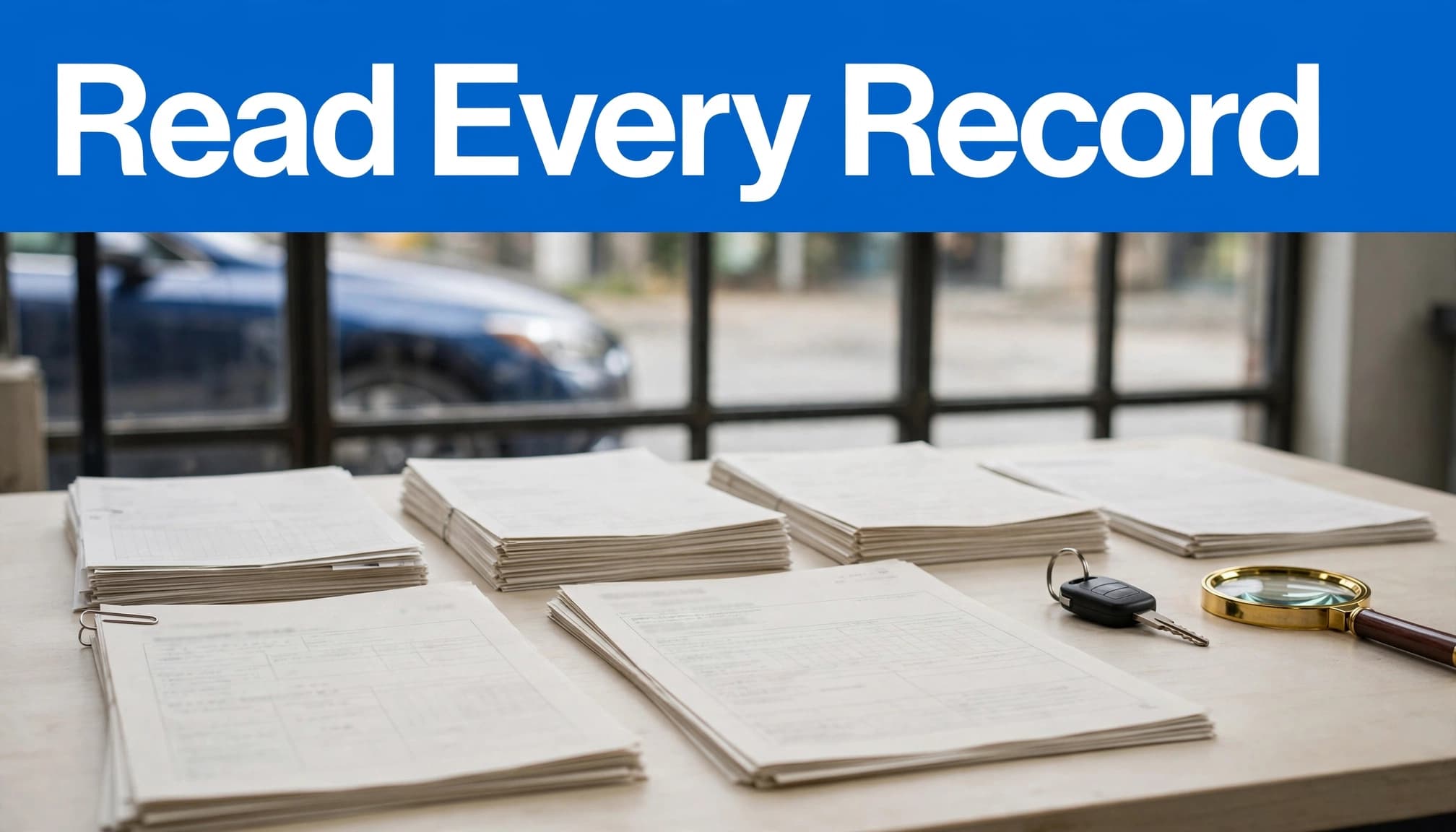
Ask to see the Japanese service book, export certificate, shipping paperwork and UK invoices for registration, conversion or servicing. Missing documents aren't necessarily proof of a problem, but the seller should clearly disclose what isn't available.
Pay attention to unit conversions. Japanese records commonly use kilometres, while UK odometers may display miles after conversion. Record both figures yourself. A dashboard reading of 50,000 miles is about 80,000 km, not 50,000 km.
Confirm Registration, Specification and Running Costs
A legally registered car can still be expensive or difficult to run if its specification does not suit the UK. Check these points before paying, not after collection.
Ask about the import and registration process
As part of your car import check, confirm how the vehicle entered the UK and whether its registration paperwork is complete. A vehicle imported permanently into the UK must be registered with DVLA. The importer normally needs to notify HMRC through NOVA within 14 days of arrival, and tax or duty may need settling before registration. The official import registration guidance explains the process and supporting evidence.
For a recently imported car, ask whether the seller has retained relevant import paperwork. Evidence of foreign registration, collection date and vehicle approval can help establish the import's legal status and explain its route into the UK.
Price insurance, parts and servicing before purchase
Get an insurance quotation using the exact registration and declare its import status, engine size, modifications and non-standard equipment. Some insurers need more detail for imported models, so a cheap online estimate may not be the final price.
Check whether the radio frequencies, speedometer, headlights and rear fog light meet UK requirements. Contact a franchised dealer or specialist with the chassis number to ask about replacement parts, likely repair costs and outstanding safety recalls. Before purchase, speak to an independent mechanic and arrange an inspection, especially for unusual models or modified cars.
Red Flags That Deserve a Pause
A history gap can be manageable. Contradictions between records are more concerning.
Slow down or walk away when you find:
- A VIN, chassis number or engine number that doesn’t match the V5C and other documents.
- Auction paperwork with altered mileage, missing references or unreadable sections.
- A lower mileage figure after a higher reading in an MOT, service invoice or auction record.
- A write-off, outstanding finance or stolen vehicle alert without direct proof that it has been cleared.
- A seller who won’t allow an independent inspection or keeps changing the import story.
The GOV.UK used-car buying checks are also useful for the basic checks that apply to any used car.
Frequently Asked Questions
Can I check an imported car's MOT history online?
Yes, once the vehicle has a UK registration, you can check its MOT results and recorded mileage online. However, this only covers tests carried out in the UK. A recent import may have no earlier British MOT entries.
Does an HPI check prove an import is safe to buy?
No. It can flag important issues, including finance, stolen status, write-off information and mileage concerns. It cannot assess mechanical condition, confirm every event overseas or replace original paperwork and a physical inspection.
What should I do if the auction sheet and MOT mileage differ?
First, check whether one figure is in kilometres and the other is in miles. If that does not explain the difference, ask the seller for documents that account for it. Do not rely on an informal explanation where the numbers still conflict.
Build Your Decision on Matching Evidence
A good imported car has a story that holds together. Its VIN matches the V5C, its overseas documents support the mileage, and its UK records show a consistent timeline.
The safest purchase comes from evidence you can verify, not a single clean report or a polished advert.