If you’re comparing Toyota Honda hybrids, a fuel economy chart won’t tell you how either car feels in traffic. One might be easier to park outside your house, while another has the boot your family needs. Both brands make capable full hybrids, but each hybrid powertrain uses its engine and electric motors differently.
For a UK buyer, the right choice depends less on the badge than on the model, your regular journeys and the condition of the particular car. “Self-charging hybrid” is a common term for a full hybrid, not a separate technical system. Start with how the hybrid technology works, then judge what you can feel from the driver’s seat.
Toyota Honda hybrids: why the systems feel different
Most full hybrids from either brand don't need plugging in. They recover energy while slowing down and use a petrol internal combustion engine when needed. This hybrid technology differs in how the engine and electric motor help drive the car.
Toyota blends engine and motor power
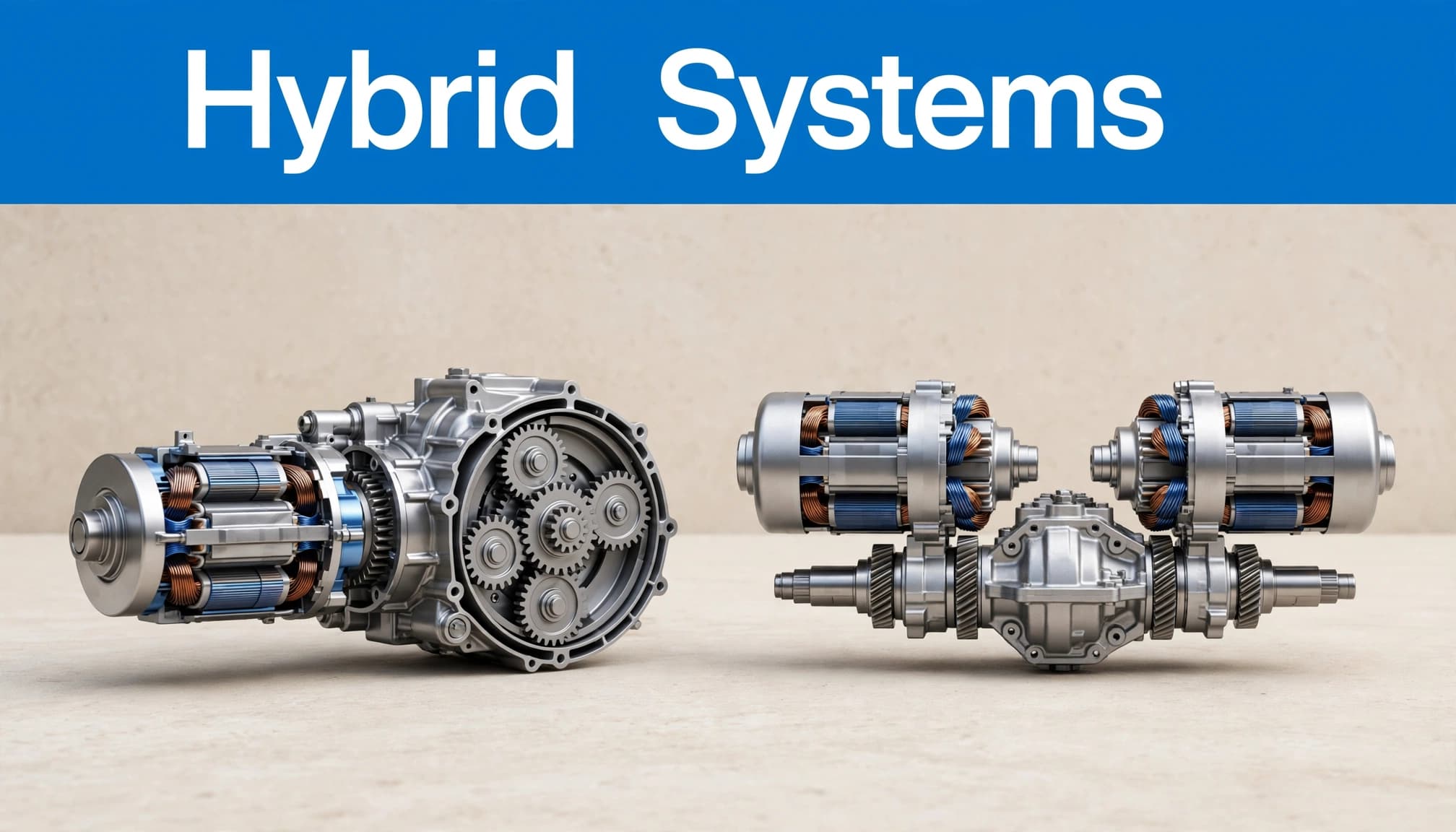
Toyota's hybrid powertrain uses a power split device built around a planetary gear set, which shares power between the petrol engine, motor and wheels. As Toyota's hybrid system explanation describes, this planetary gear set can adjust the engine and motor's contributions continuously rather than stepping through conventional gears.
That makes for smooth starts and easy low-speed driving. Under hard acceleration, however, engine revs may climb before road speed catches up. Some drivers hear this as a sustained drone. Toyota's transmission is often called an e-CVT, but it isn't a conventional belt-type continuously variable transmission.
Honda often drives the wheels electrically
Honda's e:HEV system uses two motors with different jobs. One motor generator produces electricity, while the electric motor drives the wheels. In typical Hybrid Drive operation, the petrol engine powers the motor generator rather than driving the wheels directly. At suitable cruising speeds, a clutch can connect the engine to the wheels for direct drive. Honda's explanation of e:HEV sets out these operating modes.
The result can feel particularly responsive when you pull away. Still, the engine can become audible under load in a Honda too. Drive both cars up a hill, not only around a flat dealership route.
Compare the UK models you'll use every day
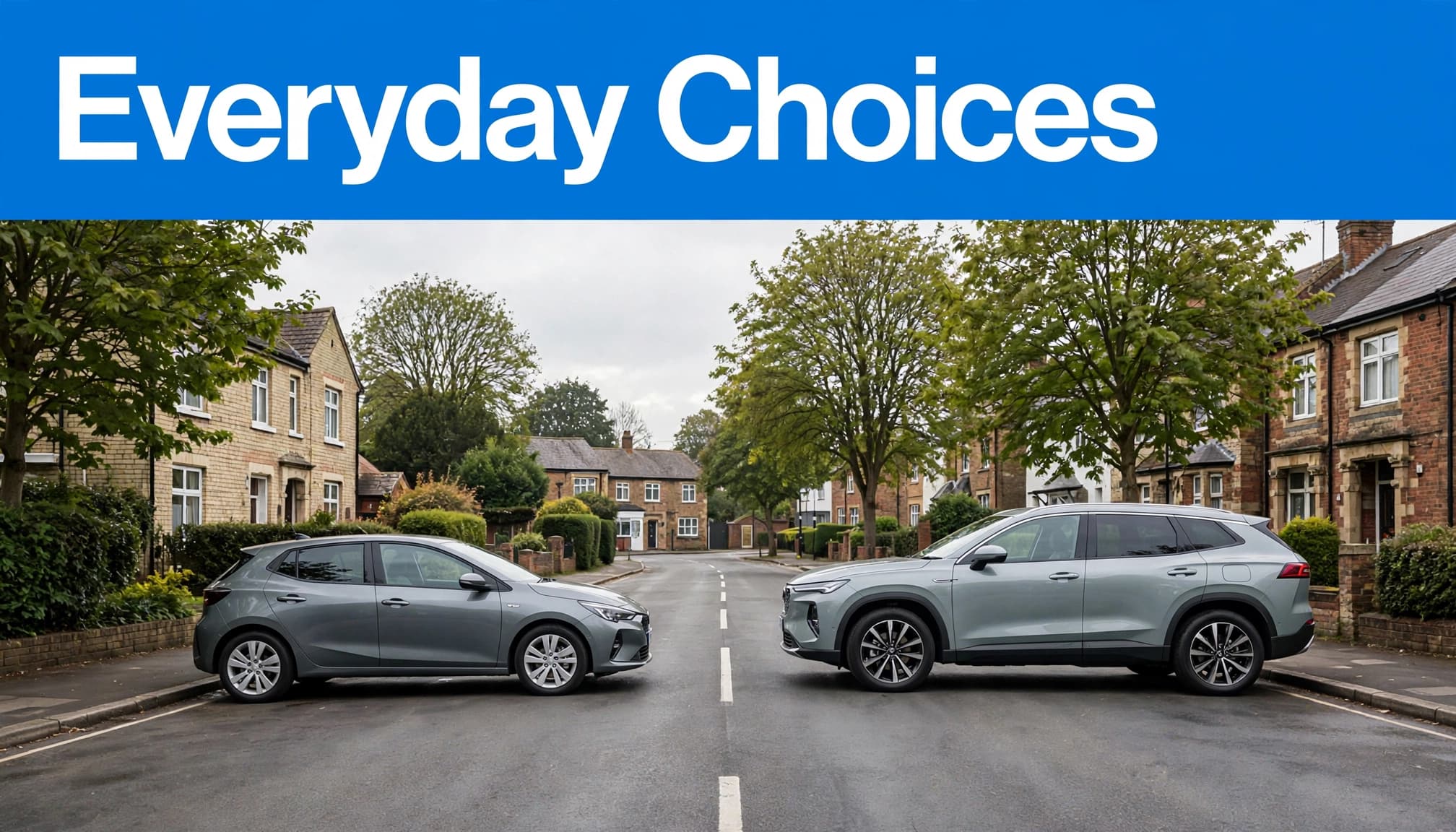
The fairest comparison pairs cars that suit the same job. A Corolla Hatchback and Civic are useful commuting rivals; a Honda CR-V needs to earn its extra space and running costs against the SUV you're considering.
Corolla or Civic for commuting?
The Corolla Hatchback offers 1.8-litre and 2.0-litre hybrid choices in Toyota's UK range. The Civic e:HEV offers a different driving character, with a strong electric-motor response when moving off. Which you prefer is best settled on the roads you use.
For family duties, sit behind your usual driving position in each car. Check rear knee room, child-seat access and whether the boot takes your pushchair or weekly shop. If estate-car space matters, the Corolla Touring Sports offers a quoted 596-litre boot. Compare its full length with your parking space before deciding that the extra capacity is free of compromise.
Crossovers and SUVs need a separate test
A Toyota Yaris Cross or Honda HR-V may appeal if you want a higher seating position without moving to a large SUV. Meanwhile, the Toyota RAV4 and Honda CR-V suit buyers seeking a larger cabin. Don't assume an SUV gives you a clearer view: sit in each one and check the front pillars, rear window and view when reversing.
UK shoppers should distinguish full hybrids from a plug-in hybrid. Toyota UK currently lists the Toyota Prius as a plug-in model, so its charging needs and official economy figures aren't directly comparable with a Corolla full hybrid. The Honda Accord Hybrid may appear in used stock, including imports, but it isn't a straightforward current new-car UK match for the Corolla and Civic.
Fuel economy: compare figures, then your route
Official WLTP figures offer a consistent starting point for comparing fuel economy. They don't promise the same result on a cold morning, a short trip across Leicester or a loaded motorway run.
| UK model | Published combined economy | What to check |
|---|---|---|
| Toyota Corolla Hatchback hybrid | 57.6 to 64.1 mpg | Engine and trim |
| Toyota Corolla Touring Sports hybrid | 57.6 to 62.7 mpg | Estate body and trim |
| Honda Civic e:HEV | From 4.7 L/100 km, approximately 60.1 mpg | Exact version |
| Honda CR-V e:HEV | 42.2 mpg | Different vehicle class |
Toyota publishes the Corolla Hatchback's WLTP range across versions. Honda's Civic Hybrid overview gives the 4.7 L/100 km figure, while its CR-V overview lists 42.2 mpg. These manufacturer figures apply to the versions shown, not to each brand as a whole. Check the current model year, trim and body style when comparing.
Full hybrids tend to use braking and electric assistance efficiently in stop-start traffic, supporting fuel efficiency. Long, fast motorway stretches give them fewer chances to recover energy, so real-world performance can differ from WLTP results. Cold starts, heating, tyres and driving style also affect fuel economy. A full hybrid's driving range depends on fuel capacity and consumption, not an electric-only range; compare it separately with a plug-in hybrid.
A small mpg advantage can be worth less than a large difference in purchase price or insurance.
Ride comfort and technology matter on a Tuesday
A hybrid's smoothest moment is often pulling away gently. Yet everyday comfort also depends on the seats, suspension and controls you touch several times a day.
Listen beyond the first mile
On a test drive, include a rough road, a 50 mph stretch and a safe opportunity to accelerate firmly. Listen for tyre noise as well as the engine. Large wheels and a higher trim can change the ride of one Corolla, Civic or CR-V enough to matter more than the powertrain difference.
At lower speeds, note how smoothly the brakes respond as regenerative braking hands over to the friction brakes. Then try parking. The best camera or sensor arrangement is the one that helps you judge your own driveway, rather than one that looks impressive on a specification sheet.
Check the cabin with your routine in mind
Set the driving position, then look over your shoulder and towards junctions. Can you see past the mirror housing? Is the rear window useful without the camera? A taller car doesn't automatically win either test.
Technology also varies by model year and trim. Pair your phone, set a destination and adjust the heating before you buy. Physical controls, touchscreen menus and driver-assistance alerts can make the same journey feel easier or more distracting.
What ownership may cost beyond petrol
Fuel savings are measurable, but they’re only part of the bill. Purchase price, depreciation, insurance, tyres, servicing and other maintenance costs can outweigh a modest difference in fuel economy.
Put mpg into pounds
At 10,000 miles a year, a car averaging 60 mpg uses about 69 litres less petrol than one averaging 55 mpg. At an illustrative £1.50 per litre, that’s roughly £103 a year. This is an example, not a guaranteed saving, and your actual figure depends on pump prices and the economy you achieve.
Before buying, get insurance quotes for the exact registration. Compare Vehicle Excise Duty for the car’s registration date and ask for prices for its tyre size. For a used car, weigh up the cash price and condition as carefully as the advertised mpg. There isn’t a sound, universal figure proving Toyota or Honda hybrids cheaper to maintain over 200,000 miles.
Service the whole car, not only the battery
Both powertrains still need scheduled engine servicing. Coolant, brake fluid, tyres and the 12-volt battery deserve attention too. Hybrid braking may reduce friction-brake wear in some use, but discs can still corrode.
Follow the handbook for the exact model and year, including any transmission-fluid requirements. Keep battery ventilation openings clear and ask for a workshop familiar with hybrids if a warning light appears. A clean service record tells you more than a seller’s promise that a hybrid is “maintenance-free”.
Battery life, reliability and warranty cover
Worries about hybrid batteries often come from older cars. Honda's earlier IMA system, for example, isn't the same hybrid technology as today's e:HEV. Nor does an ageing example of either brand predict how a modern hybrid battery will perform.
What the warranties say
Toyota's UK warranty information describes service-activated Toyota Relax cover up to 10 years or 100,000 miles, subject to its terms and qualifying servicing. Toyota also describes separate cover for the hybrid battery, which can extend to 15 years with qualifying checks or servicing. Those aren't the same warranty.
Honda's UK hybrid range information currently states five years or 100,000 km of battery cover. Battery warranty terms depend on the relevant UK cover, registration date and qualifying conditions. Check the paperwork for the car in front of you, particularly if it's a Japanese import, and confirm any remaining cover rather than assuming current UK new-car terms apply.
Don't treat a lifespan estimate as a promise
No single mileage during a vehicle lifespan predicts when either battery will fail. A replacement price depends on the model, the fault and whether repair, a refurbished unit or a new pack is appropriate. Get a diagnosis and written quote before treating a battery warning as proof that a complete pack needs replacing.
Cold weather can reduce short-trip economy; that alone doesn't show battery failure. If a used car has warning lights, unexplained poor performance or incomplete history, arrange an appropriate inspection instead of relying on a claimed battery-life figure.
Buying a used hybrid with confidence
In a comparison of pre-owned Toyota and Honda hybrids, condition can settle a close contest. A well-maintained car with suitable tyres and clear records may be a better buy than a cheaper example with unanswered warning lights.
Review the evidence before the drive
Check the service history against the manufacturer's schedule, then look at MOT history for recurring tyre, brake or suspension advisories. Confirm the VIN and registration details match the paperwork. For an import, establish its exact specification, emissions information and whether the audio, navigation and safety equipment work as expected in the UK.
An HPI check and fresh MOT are useful safeguards, but neither replaces a close inspection. Ask what the dealer's warranty covers, including hybrid components, and whether a claim has an excess or repair limit.
Make the test drive resemble your week
Start with the car cold if possible. Try a slow manoeuvre, uneven streets and the sort of faster road you regularly use. Watch for warning lights after the drive, then check the boot and rear seats with your own bags or child seats.
If two examples are similarly priced, compare their service evidence, tyre condition, insurance quotes and warranty terms. Those details give you a firmer basis for choosing than an argument about which badge is more reliable.
Key takeaways
- Toyota's power-split hybrid and Honda's two-motor e:HEV deliver electric assistance in different ways; drive both before choosing a favourite.
- Compare equivalent models and exact trims. Corolla and Civic economy figures are much closer comparisons than Civic and CR-V figures.
- For a used hybrid, documented condition and a clear ownership budget matter more than an assumed battery lifespan.
Questions drivers often ask
Do Toyota and Honda full hybrids need charging?
No. Their full hybrids charge the battery through the petrol engine and recovered braking energy. A plug-in hybrid, such as the UK-market Prius Plug-in, is a different proposition and offers the option of external charging.
Is one brand reliably cheaper to own?
There's no dependable brand-wide answer for a particular used car. Fuel use depends on the model and route, while insurance, repairs and resale value depend on its specification and condition. Price up two actual cars before deciding.
The better hybrid is the one that fits your week
Toyota and Honda hybrids can both make commuting and errands pleasantly economical. Their mechanical differences are worth understanding, but they won't tell you whether a car fits your parking space, passengers or budget.
Start with a comparable model, take a representative drive and check its history. The strongest choice is the one whose daily fit and documented condition hold up after the fuel figures have caught your eye.